
Essential Conversational Korean Phrases For Traveling To Seoul

Author
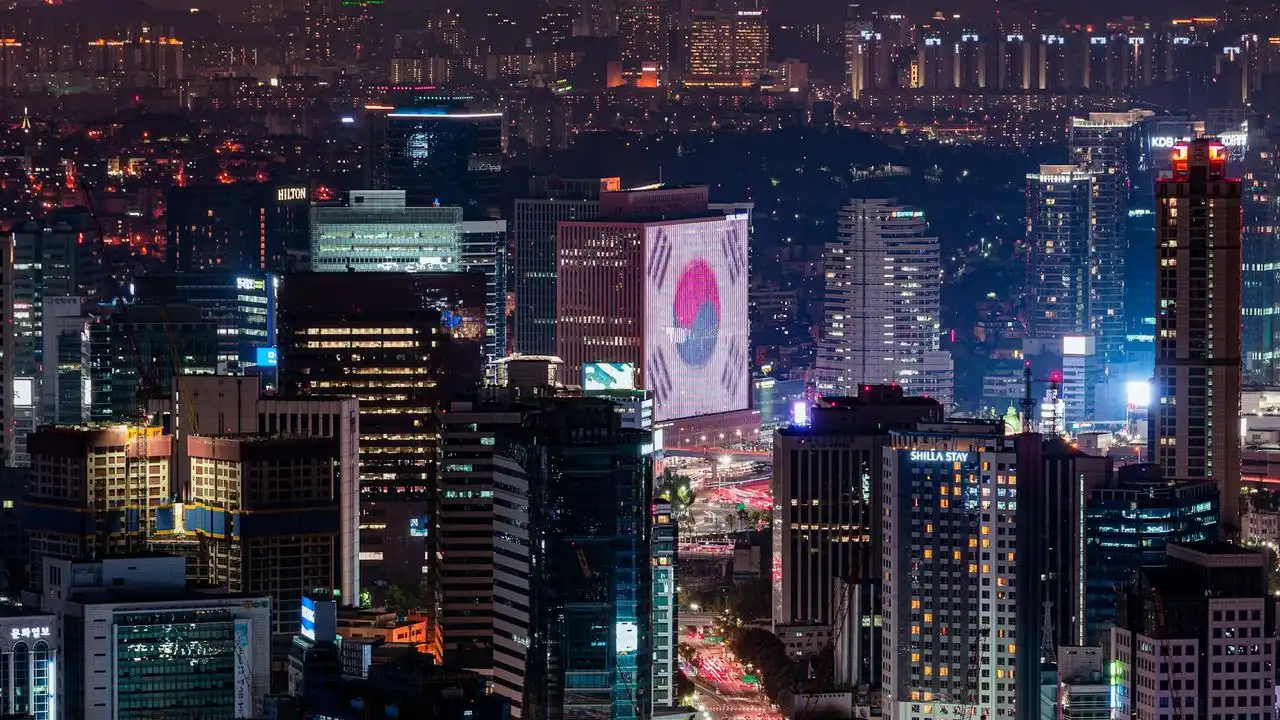
Seoul is a massive city filled with incredible food, rich history, and fast-paced energy.
Learning a few basic Korean phrases before you travel will make your trip much smoother.
The dialect spoken in Seoul is considered standard Korean.
This means the phrases you learn here will be easily understood everywhere else in the country.
Let’s look at the most useful conversational phrases you’ll need for your trip.
Table of contents:
Basic greetings and politeness
Greeting people properly is a core part of Korean culture.
You’ll use these phrases every day when entering shops, cafes, and hotels.
Standard Korean has different formality levels depending on who you’re speaking to.
As a tourist, you should always use the polite form to show respect to locals.
The phrases below use the polite “yo” (요) or “nida” (니다) endings.
| English | Korean | Transliteration |
|---|---|---|
| Hello | 안녕하세요 | Annyeong-haseyo |
| Thank you | 감사합니다 | Gamsa-hamnida |
| I am sorry | 죄송합니다 | Joesong-hamnida |
| Yes | 네 | Ne |
| No | 아니요 | Aniyo |
When you enter a store or restaurant, the staff will usually greet you first.
You can simply reply with a polite hello and a slight bow of your head.

안녕하세요.
감사합니다.
Getting around Seoul (transportation)
Seoul has one of the best public transit systems in the entire world.
Even with English signs everywhere, you might still need to ask for directions.
The easiest way to find something is to say the location followed by “eodi-eyo” (어디에요?).
This phrase directly translates to “Where is…?”.
| English | Korean | Transliteration |
|---|---|---|
| Where is…? | …어디에요? | …eodi-eyo? |
| Subway station | 지하철역 | Jihacheol-yeok |
| Bus stop | 버스 정류장 | Beoseu jeongnyujang |
| Bathroom | 화장실 | Hwajangsil |
Here’s how you would ask a local person for directions to the subway.
저기요, 지하철역 어디에요?
Ordering food at a restaurant
Eating out is a huge highlight of visiting Seoul.
When you walk into a bustling Korean restaurant, you’ll need to get the server’s attention.
It’s completely normal and polite to call out to the waiter in Korea.
You can say “jeogiyo” (저기요) to politely call a waiter over to your table.
To order your food, simply point to the menu or say the item name followed by “juseyo” (주세요).
| English | Korean | Transliteration |
|---|---|---|
| Excuse me / Over here | 저기요 | Jeogiyo |
| Please give me… | …주세요 | …juseyo |
| Water | 물 | Mul |
| Menu | 메뉴판 | Menyupan |
Here’s a simple exchange you can use when ordering a meal.
저기요! 비빔밥 하나 주세요.
Shopping in Seoul
Seoul is famous for its massive shopping districts like Myeongdong and Hongdae.
When browsing through markets, you’ll definitely need to ask about prices.
The phrase “eolmayeyo” (얼마예요?) simply means “How much is it?”.
| English | Korean | Transliteration |
|---|---|---|
| How much is it? | 얼마예요? | Eolmayeyo? |
| This one | 이거 | Igeo |
You can point to an item on a rack and ask the shop owner this question.
이거 얼마예요?
Asking for help
You’ll eventually encounter situations where you need to communicate in English.
Many young people and service workers in Seoul speak at least a little bit of English.
It’s highly recommended to politely ask if they speak English before you start asking your question.
| English | Korean | Transliteration |
|---|---|---|
| Do you speak English? | 영어 하세요? | Yeongeo haseyo? |
| I don’t speak Korean well | 한국어 잘 못해요 | Hangugeo jal mothaeyo |
영어 하세요?
Learning these simple phrases will help you navigate Seoul with confidence.
Korean people truly appreciate it when visitors make an effort to speak their language.
